
Most people think of diamonds as luxury gemstones. They imagine engagement rings, museum pieces, or rare collectibles locked in display cases. Yet diamonds possess scientific qualities that reach far beyond jewelry. One property stands out above the rest: thermal conductivity. In simple terms, diamonds move heat extremely well. They conduct heat better than nearly any other natural material known to science.
Because of this ability, engineers and researchers have found ways to use diamonds in fields that have nothing to do with adornment. Electronics, medicine, aerospace technology, and even quantum computing benefit from this unusual property. When you look closely at how heat behaves inside a diamond, you begin to see why scientists value these crystals as much as jewelers do. In fact, many industrial diamonds never become gemstones at all. Instead, they quietly help modern technology run faster, cooler, and more efficiently.
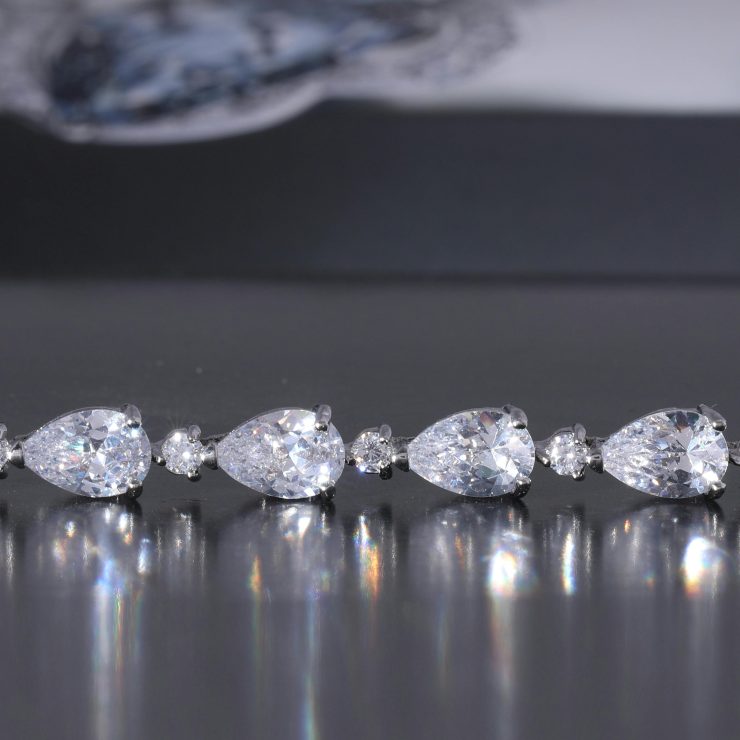
Why Diamonds Conduct Heat So Efficiently
At the atomic level, a diamond forms an extremely rigid lattice. Carbon atoms arrange themselves in a tight, repeating three-dimensional structure. Each atom bonds strongly to four neighbors, creating a network that resembles a microscopic scaffold. This structure plays a crucial role in heat transfer.
Heat travels through materials in the form of vibrations, often called phonons. When atoms vibrate, energy moves from one atom to the next. In diamonds, the carbon lattice allows those vibrations to travel with very little resistance. The result is extraordinary thermal conductivity. For comparison, copper conducts heat well and many electronics rely on it. However, diamond conducts heat several times more efficiently.
This property gives diamond an unusual advantage. While many materials trap heat or spread it slowly, diamond moves it away from sensitive components quickly. Engineers often describe it as a natural heat highway. Energy flows through it smoothly. Devices stay cooler. Performance improves.
Another interesting detail involves purity. Natural diamonds contain small impurities such as nitrogen or boron. These trace elements disrupt the lattice slightly. When scientists create synthetic diamonds with fewer defects, thermal conductivity can become even higher. That improvement makes lab-grown diamond especially attractive for technical applications.
Cooling High-Performance Electronics
Modern electronics face a constant challenge: heat buildup. Powerful processors generate significant thermal energy. If that heat cannot escape, the device slows down or fails. Anyone who has felt a hot laptop after heavy use has experienced this problem firsthand.
Engineers have begun using diamond materials to address this issue. Thin diamond layers can sit beneath microchips or power transistors. These layers act like microscopic heat spreaders. They pull thermal energy away from active components before damage occurs.
Several industries rely on this strategy:
-
High-power semiconductors
-
Radio frequency communication systems
-
Advanced computer processors
-
Electric vehicle power electronics
Consider a radio transmitter used in satellite communication. The device produces intense heat during operation. Traditional materials struggle to manage it efficiently. When engineers add a diamond heat spreader, the temperature drops noticeably. The system operates longer without performance loss.
This cooling ability becomes more important each year. Electronic devices keep shrinking while processing demands keep growing. Smaller components leave less space for heat dissipation. Diamond helps solve that puzzle by carrying heat away quickly.
Applications in Aerospace and Space Technology
Space exploration places extreme demands on materials. Satellites, probes, and spacecraft encounter wide temperature swings. One side may face intense solar radiation. The other side remains frozen in shadow. Engineers must control heat carefully to keep sensitive instruments working.
Diamond materials help regulate those thermal extremes. Because diamond spreads heat rapidly, it can distribute energy evenly across delicate electronics. Instruments remain stable even when environmental conditions change quickly.
Some aerospace systems use diamond coatings or diamond substrates in laser systems, sensors, and high-power amplifiers. These components often operate continuously for years. Efficient heat removal becomes essential for reliability.
There is another advantage. Diamond also resists radiation damage better than many conventional materials. Cosmic radiation gradually degrades electronic components. Diamond structures maintain stability under such exposure. For long-duration missions, this durability becomes a valuable asset.
Medical Technology and Laser Systems
Medical devices frequently generate concentrated heat. Surgical lasers provide a clear example. During procedures such as eye surgery or dermatological treatments, laser systems must maintain consistent performance. Excess heat can reduce precision or damage equipment.
Diamond optics and heat spreaders help stabilize these systems. By conducting heat away from the laser source, diamond components prevent overheating. Doctors gain better control over the energy output. Procedures become more predictable.
Some medical imaging systems also benefit from diamond materials. High-power detectors and sensors operate more reliably when heat dissipates quickly. The result is clearer imaging and more accurate data.
In these environments, precision matters enormously. Even small temperature fluctuations can alter measurement accuracy. Diamond’s thermal behavior provides stability that other materials sometimes struggle to match.
Quantum Computing and Advanced Sensors
Emerging technologies have discovered another fascinating use for diamond. Researchers exploring quantum computing often rely on defects inside the diamond lattice known as nitrogen-vacancy centers. These tiny imperfections behave like stable quantum systems.
Maintaining such delicate quantum states requires careful temperature control. Heat fluctuations can disrupt the behavior of these atomic structures. Diamond’s thermal conductivity helps stabilize the environment surrounding them.
Because of this, scientists use diamond in experimental quantum sensors capable of detecting magnetic fields, temperature changes, and even microscopic variations in pressure. These sensors could transform fields such as navigation, materials science, and medical diagnostics.
Although the technology remains young, diamond already shows promise as a platform for next-generation devices. Its combination of physical stability, optical clarity, and heat management creates unique possibilities.

Industrial Cutting and Heat Management
Industrial diamonds often appear in cutting tools. Drilling equipment, grinding wheels, and machining tools frequently incorporate diamond surfaces. Hardness explains part of this choice. Diamond ranks as the hardest natural material known.
Yet thermal conductivity also plays a role. During cutting or drilling, friction generates intense heat. If that heat remains trapped near the tool edge, the material weakens. Diamond quickly pulls the heat away from the cutting surface. The tool maintains strength and precision for longer periods.
Manufacturers sometimes embed small diamond particles into composite materials. These particles help manage heat in high-stress mechanical environments. Machines run cooler. Wear slows down. Production efficiency improves.
Synthetic Diamond and Future Innovation
Natural diamonds appear rarely in industrial technology. Instead, researchers rely heavily on lab-grown diamond. Modern manufacturing techniques allow scientists to grow diamond crystals through processes such as chemical vapor deposition.
This approach offers several advantages. Producers can control crystal purity, thickness, and structure. Engineers can tailor diamond materials specifically for electronics, optics, or heat management. Costs also decrease when diamonds grow in controlled laboratory environments rather than being mined.
As these technologies mature, new applications continue to appear. Researchers explore diamond heat spreaders for electric vehicle batteries. Others examine diamond windows for high-power microwave devices. Some laboratories investigate diamond coatings that protect sensitive components from extreme environments.
The common thread remains the same: diamond handles heat exceptionally well. Wherever heat threatens performance, engineers begin to ask whether diamond might provide a solution.
Conclusion
Diamonds hold a unique place in both culture and science. Jewelry captures public attention because it highlights the gemstone’s beauty. Yet the crystal’s hidden properties may prove even more valuable. Among these properties, thermal conductivity stands out as one of the most remarkable.
From cooling advanced electronics to stabilizing quantum sensors, diamond quietly supports technologies that shape modern life. Aerospace systems rely on it. Medical lasers benefit from it. Cutting tools last longer because of it. Each application builds on the same fundamental principle: diamond moves heat with extraordinary efficiency.
As synthetic diamond production continues to improve, these applications will likely expand. Engineers constantly search for materials that perform reliably under extreme conditions. Diamond already demonstrates that it can meet many of those demands. While gemstones sparkle in display cases, industrial diamonds help power innovation behind the scenes.