
Diamonds may look similar on the surface, but deep inside, their atomic structure can tell a very different story. Gemologists don’t classify diamonds only by color, clarity, or carat weight. They also study their chemical makeup, especially the presence or absence of nitrogen and boron impurities. This internal fingerprint helps place diamonds into scientific categories known as diamond types.
Among these categories, Type Ia and Type II diamonds stand out as the most discussed. They differ in rarity, formation conditions, appearance, and even market perception. If you imagine diamonds as books, the outside sparkle is the cover, while the diamond type reveals the story written inside. Understanding this distinction helps buyers, collectors, and professionals make more informed decisions. It also explains why two diamonds that look alike can behave very differently under laboratory testing or carry very different values.
Let’s explore how Type Ia and Type II diamonds compare, what makes them unique, and why this classification matters far beyond the jewelry showcase.
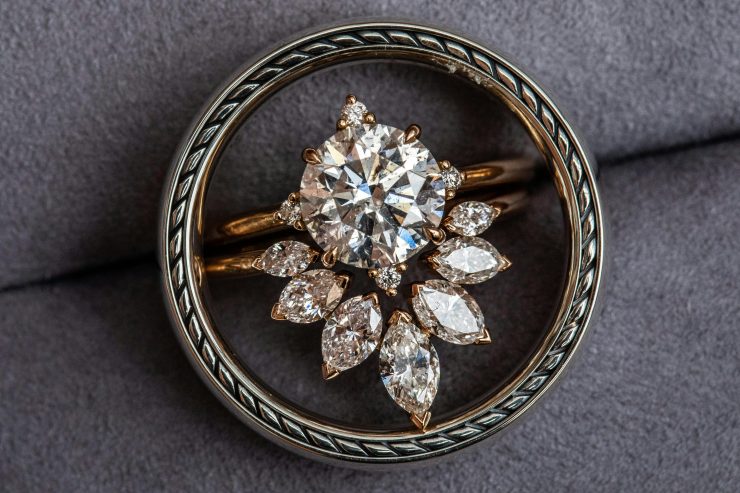
What Diamond Type Classification Means
Diamond type classification focuses on trace elements trapped inside the crystal lattice during formation. Pure diamond consists entirely of carbon atoms arranged in a tight, repeating structure. However, nature rarely works with perfect simplicity. Tiny amounts of nitrogen, boron, or structural irregularities often enter the crystal during growth deep within the Earth.
These impurities affect how diamonds absorb light, conduct electricity, and respond to testing methods such as infrared spectroscopy and ultraviolet fluorescence. Because of this, gemological laboratories use diamond typing as a scientific tool rather than a visual grading system.
The two main families are Type I and Type II. Type I diamonds contain measurable nitrogen. Type II diamonds contain little to no detectable nitrogen. From there, the categories split further into subgroups like Ia, Ib, IIa, and IIb.
Most diamonds sold in jewelry stores belong to Type Ia. Type II diamonds are much rarer and often include some of the world’s most famous stones. Think of Type Ia as the common language of diamonds, while Type II speaks with a much rarer accent.
Understanding Type Ia Diamonds
Type Ia diamonds contain nitrogen atoms grouped in clusters within the crystal structure. These clusters form over extremely long geological periods under intense heat and pressure. Because of this natural process, Type Ia diamonds are the most common category, making up around 95% of all natural diamonds.
These nitrogen clusters influence how the diamond interacts with light. Many Type Ia diamonds show a slight yellow tint because nitrogen absorbs blue light, leaving more yellow visible to the eye. However, not every Type Ia diamond appears yellow. Some remain near-colorless depending on how the nitrogen is arranged.
Type Ia diamonds split into two subcategories: IaA and IaB. IaA diamonds contain nitrogen pairs, while IaB diamonds contain larger groups of four nitrogen atoms surrounding a vacancy. Some diamonds contain both arrangements.
This might sound like chemistry class sneaking into jewelry shopping, but it matters. The nitrogen arrangement can affect fluorescence, transparency, and even how the diamond reacts during treatment processes.
Most traditional engagement ring diamonds fall into this category. They’re familiar, beautiful, and widely available. In many ways, Type Ia diamonds are the everyday champions of the diamond world.
Understanding Type II Diamonds
Type II diamonds contain little to no measurable nitrogen. This makes them much rarer and often more valuable depending on other quality factors. They represent only about 2% of natural diamonds, which already places them in exclusive company.
Type II diamonds divide into Type IIa and Type IIb. Type IIa diamonds are considered some of the purest diamonds chemically because they contain almost no nitrogen or boron. They often display exceptional transparency and can appear remarkably colorless. Some famous historic diamonds, including legendary museum pieces, belong to this category.
Type IIb diamonds contain trace amounts of boron instead of nitrogen. Boron gives these diamonds unique electrical conductivity and often creates a blue or gray body color. The famous Hope Diamond is a well-known Type IIb example.
Because Type II diamonds lack nitrogen, they can show optical behavior that differs sharply from Type Ia stones. Some also respond differently to laboratory-grown processes and treatment detection methods, which makes identification especially important in gemological labs.
You could compare Type II diamonds to rare first editions of a book. They aren’t automatically better, but they are uncommon and often attract serious attention.
Visual Differences Between Type Ia and Type II Diamonds
At first glance, you usually can’t identify diamond type just by looking. A Type Ia and a Type IIa diamond may appear equally brilliant under jewelry store lighting. However, subtle patterns often emerge.
Type Ia diamonds commonly show faint yellow tones due to nitrogen content. This doesn’t mean they look obviously yellow. Often, the warmth is delicate and only noticeable when compared side by side with higher color-grade stones.
Type IIa diamonds, on the other hand, often appear exceptionally transparent and colorless. They may have a crisp, almost icy visual quality. Some collectors describe them as having a “clean window” look because light passes through with unusual purity.
Type IIb diamonds often display blue, gray, or steely undertones. Their color can feel mysterious rather than bright, like moonlight instead of sunshine.
Still, appearances can be misleading. Fancy color diamonds can exist in multiple type categories. A yellow diamond isn’t automatically Type Ia, and a colorless diamond isn’t automatically Type IIa. That’s why laboratory analysis remains essential.
Judging diamond type by eye alone is like guessing someone’s hometown from their shoes. Sometimes you get lucky, but usually you need better evidence.
How Laboratories Identify Diamond Type
Gemological laboratories rely on advanced instruments rather than visual inspection. Infrared spectroscopy plays one of the biggest roles because it detects how the diamond absorbs infrared light, revealing the presence and arrangement of impurities.
This method helps identify nitrogen clusters in Type Ia diamonds and confirms the absence of measurable nitrogen in Type II stones. Spectroscopy can also detect boron in Type IIb diamonds.
Other methods include photoluminescence testing, fluorescence observation, conductivity testing, and ultraviolet imaging. These tools help labs distinguish between natural diamonds, treated diamonds, and laboratory-grown stones.
This matters because certain treatments, especially HPHT processing, can change a diamond’s appearance dramatically. Some treated diamonds begin as lower-color Type Ia stones and undergo transformation to improve visual appeal. Without proper testing, buyers might never know the full story.
Laboratory reports from organizations like Gemological Institute of America often include diamond type information for stones where this detail holds significance.
In short, gemologists don’t guess. They investigate.
Value and Market Perception
Many buyers assume rarity always means higher value. That idea sounds logical, but diamonds enjoy breaking simple rules. Type II diamonds are rarer, yet value still depends heavily on cut, clarity, color, size, and market demand.
A poorly cut Type IIa diamond won’t magically outperform a beautifully cut Type Ia stone. Sparkle still matters. Beauty still matters. Certification still matters.
That said, collectors and investors often pay strong premiums for exceptional Type II diamonds because of their rarity and purity. Large colorless Type IIa stones can command remarkable prices, especially when paired with strong provenance or historical importance.
Type IIb blue diamonds enter another level entirely. Their scarcity and distinctive color make them some of the most valuable diamonds in the world.
Type Ia diamonds dominate the commercial market because they offer broad accessibility and a wide range of price points. They are not lesser diamonds. They are simply more common.
Think of it like wine. A rare vintage bottle may be extraordinary, but a well-made classic can still be exactly what someone wants.
Why This Classification Matters for Buyers
For everyday buyers, diamond type may not be the first priority. Cut quality, budget, and personal style usually lead the conversation. Still, understanding diamond type adds useful context, especially for high-value purchases.
If you’re buying a large colorless diamond, knowing whether it’s Type IIa may help explain pricing and rarity. If you’re considering a blue diamond, Type IIb classification becomes highly relevant. If treatment concerns exist, typing can help verify authenticity and history.
Collectors often pay closer attention because diamond type influences long-term desirability. Auction houses, museums, and serious investors rarely ignore it.
Even if you never ask for diamond type on a standard engagement ring, the knowledge helps you ask sharper questions and read laboratory reports with more confidence.
It turns the purchase from simple shopping into informed ownership. And frankly, that feels a lot better than buying sparkle with crossed fingers.
Conclusion
Type Ia and Type II diamonds represent two very different stories written inside the same mineral. Type Ia diamonds, rich in nitrogen, dominate the natural diamond market and offer the beauty most buyers know best. Type II diamonds, with little or no nitrogen, are rare, often purer, and frequently linked to exceptional colorless or blue stones.
Neither category automatically guarantees better beauty or higher value. Instead, classification provides context. It helps explain why certain diamonds look different, test differently, and command stronger market attention.
In gemology, the smallest details often carry the biggest meaning. A few atoms of nitrogen or boron can change an entire diamond’s identity. That’s a powerful reminder that in both science and jewelry, what lies beneath the surface often matters most.