
What Is a Hearts and Arrows Diamond Pattern?
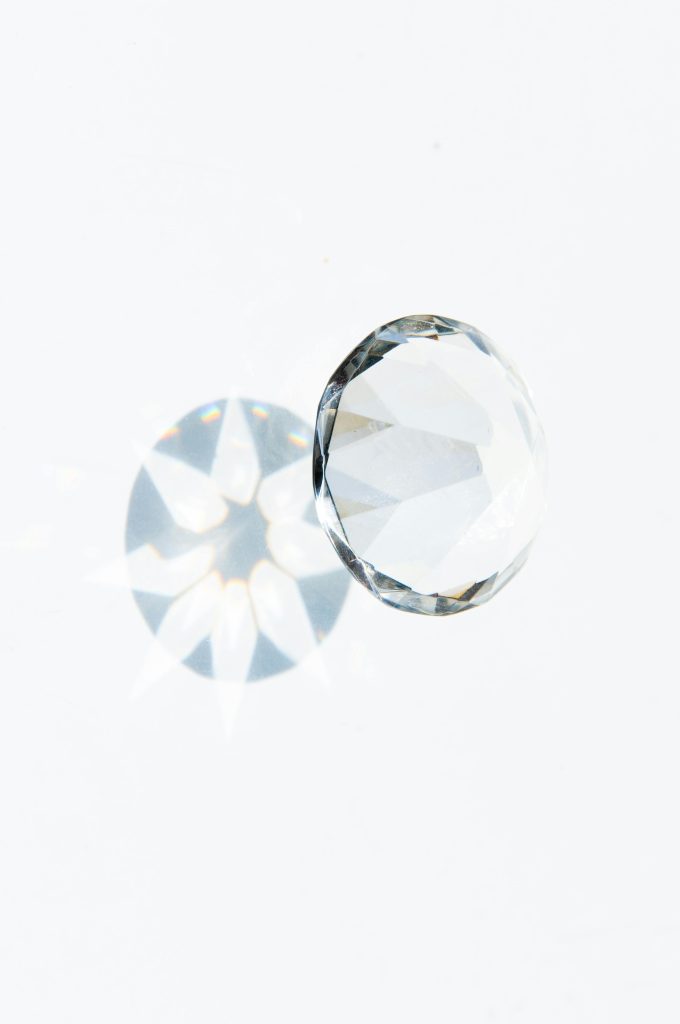
When you hear the term “hearts and arrows,” it might sound romantic, almost poetic. In reality, it refers to a very precise optical pattern seen in certain round brilliant diamonds. This pattern appears when a diamond has been cut with exceptional symmetry and alignment. Look at the stone from the top, and you’ll see eight arrow shapes radiating outward. Flip it over, and eight distinct heart shapes come into view.
This visual effect doesn’t happen by accident. It forms only when the diamond’s facets line up with near-perfect precision. Even tiny deviations can distort the pattern. Because of that, hearts and arrows diamonds often represent the upper tier of cutting craftsmanship. You’re not just looking at sparkle. You’re seeing the result of meticulous planning and execution, where every angle plays its part.
How the Pattern Forms
To understand the pattern, it helps to picture the diamond as a series of mirrors. Each facet reflects light and interacts with its neighbors. When the proportions and symmetry align correctly, light reflects in a consistent, repeating way. That’s what creates the recognizable hearts and arrows effect.
The arrows appear when you view the diamond face-up under a special viewer. These arrows form from the pavilion facets reflecting through the crown. Turn the diamond over, and the hearts emerge from the same facets viewed from below. Each heart should look uniform, with clean edges and a pointed “V” shape between them.
If the diamond’s cut is even slightly off, the pattern breaks. Hearts may look uneven or split. Arrows may appear bent or mismatched. In other words, the pattern acts like a visual test of cutting precision. It’s a bit like looking at a perfectly tuned instrument. When everything aligns, the result feels balanced and harmonious.
Why Cut Precision Matters So Much
You might wonder why this pattern gets so much attention. After all, diamonds sparkle regardless, right? That’s true to a degree. However, the hearts and arrows pattern signals something deeper than surface brilliance.
Cut precision directly affects how light behaves inside the diamond. When facets align perfectly, light enters, reflects internally, and exits in a controlled way. This process enhances brightness, fire, and scintillation. In simpler terms, the diamond looks more lively. It catches your eye more easily, even in subtle lighting.
Think of it like a well-cut lens. When everything lines up, the image appears crisp and vivid. If not, the image becomes dull or distorted. The same principle applies here. A hearts and arrows diamond doesn’t just look good under a microscope. It often performs better in everyday lighting conditions.
Are All Ideal Cut Diamonds Hearts and Arrows?
Not necessarily. This is where things can get a bit nuanced. Many diamonds receive an “ideal” or “excellent” cut grade from grading labs. However, not all of them display a true hearts and arrows pattern.
Grading systems evaluate proportions, polish, and symmetry. They provide a broad assessment. The hearts and arrows pattern, on the other hand, requires stricter alignment. It focuses on optical symmetry, which goes beyond standard grading criteria.
So, you could have a diamond with an excellent cut grade that doesn’t show the pattern. Conversely, a true hearts and arrows diamond almost always falls within the highest cut categories. The difference lies in the level of precision. One meets the standard. The other pushes beyond it.
How Experts Evaluate the Pattern
Professionals don’t rely on the naked eye alone. They use specialized viewers or scopes designed to reveal the pattern clearly. Under these tools, the diamond’s symmetry becomes easier to assess.
When evaluating hearts, experts look for:
- Even size and shape across all eight hearts
- Clean separation between each heart
- Sharp, well-defined clefts (the V-shaped gaps)
For arrows, they check:
- Straight, evenly spaced shafts
- Uniform arrowheads
- Consistent contrast across the pattern
Even small inconsistencies can signal minor misalignments. While these may not always impact beauty dramatically, they do affect whether the diamond qualifies as a true hearts and arrows stone.
Does the Pattern Affect Value?
In many cases, yes. Diamonds that display a precise hearts and arrows pattern often command higher prices. This premium reflects the skill and time required to achieve such accuracy. Cutting a diamond to this level can mean sacrificing more rough material, which adds to the cost.
However, value depends on context. Not every buyer prioritizes optical symmetry to this extent. Some may focus more on carat weight or color. Others might prefer a slightly larger stone over a perfectly symmetrical one.
Still, for those who appreciate craftsmanship, the pattern can hold strong appeal. It offers a visible sign of quality that goes beyond grading reports. It’s a bit like choosing a handcrafted watch over a mass-produced one. Both tell time, yet one carries a different kind of story.
Common Misconceptions
It’s easy to assume that all sparkling diamonds have this pattern. That’s not the case. Many diamonds sparkle beautifully without meeting the strict criteria for hearts and arrows.
Another misconception involves visibility. You won’t typically see the hearts pattern without magnification. The arrows may be faintly visible in some lighting conditions, though they’re still subtle. The pattern’s value lies more in what it represents than in what you see day to day.
Some also believe that the pattern guarantees the best possible appearance. While it strongly suggests excellent performance, other factors still matter. Color, clarity, and overall proportions all play a role in how a diamond looks.
Hearts and Arrows vs. Standard Symmetry
Standard symmetry focuses on how well the diamond’s facets align on a structural level. Hearts and arrows symmetry goes further. It evaluates how those facets interact optically when light passes through the stone.
You can think of it as the difference between a well-built house and one with perfect interior design. The structure may be solid in both cases. However, the finer details create a more refined experience in one of them.
That extra level of refinement explains why hearts and arrows diamonds often attract collectors and enthusiasts. They represent a blend of science and artistry, where precision meets visual beauty.
Is It Worth Prioritizing?
That depends on what matters most to you. If you value precision, craftsmanship, and optical performance, the hearts and arrows pattern can be a meaningful feature. It offers reassurance that the diamond has been cut with exceptional care.
On the other hand, if you prioritize size or budget, you might find better balance elsewhere. A diamond without this pattern can still look stunning. In many cases, the differences are subtle to the untrained eye.
Ultimately, the pattern serves as a benchmark. It shows what’s possible when cutting reaches its highest level. Whether you choose to prioritize it comes down to personal preference and how you define value.